

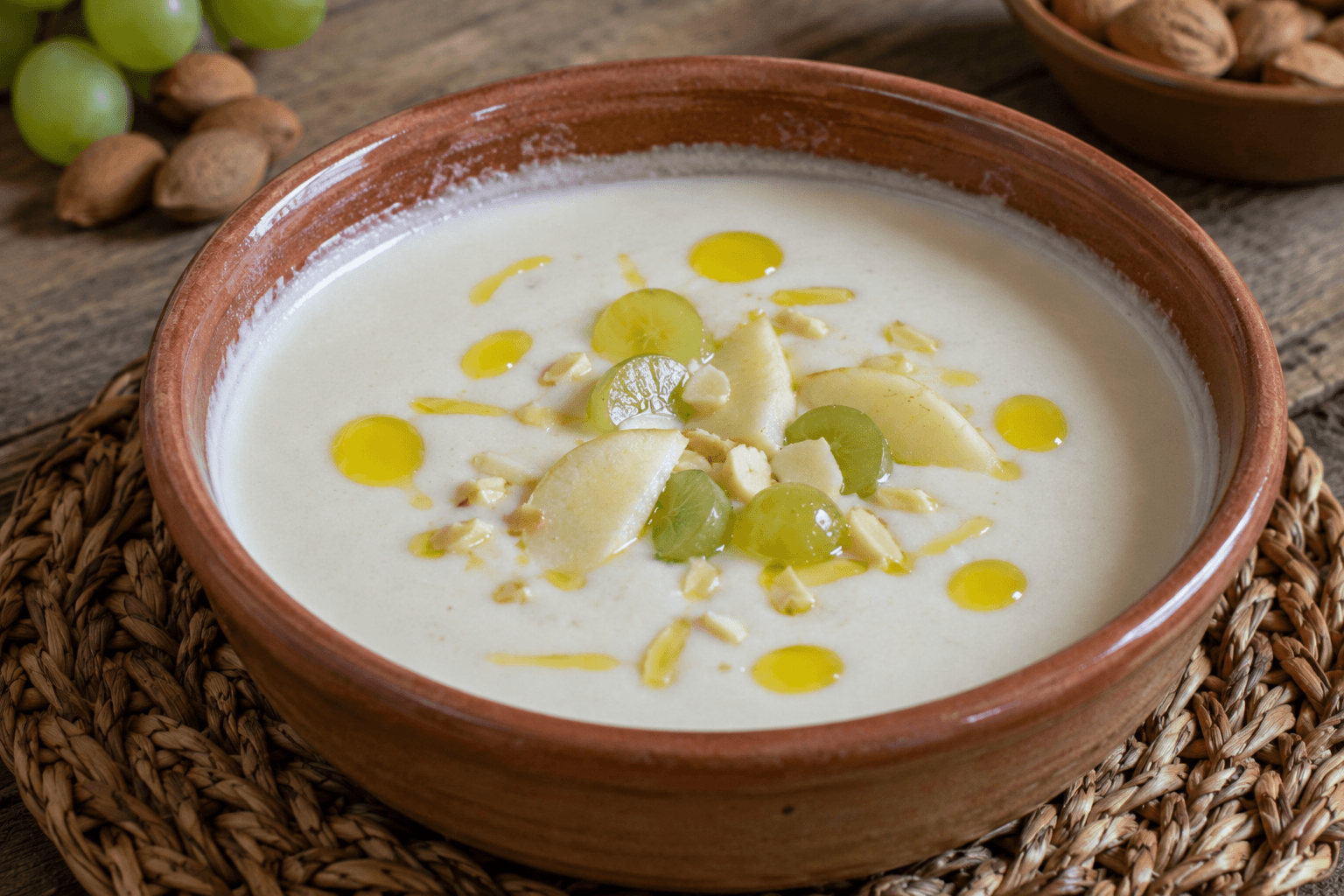
Genalguacil's Ajoblanco Serrano
Considered one of the great classics of inland Andalusian cuisine, ajoblanco finds one of its most authentic expressions in the villages of the Serranía. Fresh, nutritious, and surprisingly simple, it is one of the most

The cold soup that cools you down during summers in the Genal Valley
Genalguacil, nestled among mountains and forests in the heart of the Genal Valley, preserves a culinary tradition deeply rooted in the land and the rural customs of the Serranía de Ronda. Among its most traditional recipes is ajoblanco serrano, a humble dish that has been a staple for generations of farmers and families in the region.
Considered one of the great classics of inland Andalusian cuisine, ajoblanco finds one of its most authentic expressions in the villages of the Serranía. Fresh, nutritious, and surprisingly simple, it is one of the most representative summer dishes in Genalguacil.
Its combination of almonds, garlic, bread, and olive oil perfectly captures the essence of the traditional Mediterranean diet.
A recipe with centuries of history
The origins of ajoblanco date back to a time before tomatoes arrived in Europe. For centuries, rural families prepared this cold soup using basic ingredients found in virtually every Andalusian home.
Almonds, which are abundant in many areas of Málaga, played a fundamental role in the traditional diet. Combining them with garlic, bread, and olive oil resulted in an energy-rich and refreshing dish that could be kept for hours, even on the hottest days.
In Genalguacil, ajoblanco remains part of the collective culinary memory and is still prepared according to recipes passed down from generation to generation.
Gastronomic Context
The cuisine of the Genal Valley is notable for its use of local products such as chestnuts, citrus fruits, olive oil, and nuts.
During the summer, cold soups take center stage. Ajoblanco holds a special place within this tradition thanks to its ability to naturally refresh and provide energy.
It is commonly found both at family gatherings and in culinary offerings that seek to preserve traditional mountain cuisine.
Common Ingredients
The traditional recipe is usually made with:
Raw almonds
Garlic
Stale bread
Extra virgin olive oil
Wine vinegar
Cold water
Salt
It is traditionally served with Muscat grapes, melon, or apples, depending on the season.
Traditional preparation
The almonds are ground together with the garlic until a smooth, even paste is formed.
Next, the soaked bread is added and slowly emulsified with extra virgin olive oil, adding cold water until a smooth, creamy texture is achieved.
Finally, vinegar and salt are added to taste.
After several hours of refrigeration, the ajoblanco reaches its peak of flavor and freshness.
Local or Regional Significance
Ajoblanco reflects the essence of the traditional cuisine of the Genal Valley: making the most of local ingredients, simplicity, and a deep respect for the region’s produce.
Almonds and olive oil directly link the recipe to the agricultural landscape surrounding Genalguacil, while its preparation preserves culinary techniques that have been passed down from generation to generation.
It is one of the best examples of how traditional cuisine can remain fully relevant today.