
Betancuria's Canarian Sancocho
Betancuria—the former capital of Fuerteventura and one of the towns with the greatest historical significance in the Canary Islands—preserves a culinary tradition deeply rooted in the island’s landscape, its seafaring he

A Fuerteventura tradition that has become a summer must-do
Betancuria, the former capital of Fuerteventura and one of the towns with the greatest historical significance in the Canary Islands, preserves a culinary tradition deeply rooted in the island’s landscape, its seafaring heritage, and the use of local resources in a region shaped by the ocean and the Atlantic climate. Among its most iconic recipes is Canarian sancocho, a dish that is part of the islands’ culinary identity and continues to hold a special place on tables across Fuerteventura.
Although it can be enjoyed year-round, sancocho is especially appreciated during the warmer months thanks to its simplicity, its nutritional value, and the freshness provided by its traditional accompaniments. It is a recipe that is deeply rooted in the history of Fuerteventura and the seafaring culture that has shaped its people for generations.
A recipe born by the Atlantic
The history of sancocho is closely linked to fishing and maritime trade, which for centuries connected the Canary Islands with other Atlantic regions. Salted fish, especially sea bass or grouper, allowed food to be preserved for long periods of time and ensured a stable source of protein for island families.
Over the years, this preservation technique gave rise to one of the archipelago’s most iconic recipes. In Betancuria, where tradition and history remain very much alive, sancocho continues to be an essential dish at family celebrations and local festivals.
Gastronomic Context
Betancuria’s cuisine perfectly reflects the essence of Fuerteventura: simple ingredients, recipes passed down from generation to generation, and a deep connection to the land.
Fish, potatoes, gofio, and products from traditional livestock farming have formed the basis of the local diet for centuries. Sancocho brings together many of these elements in a single dish that embodies the island’s culinary identity.
During the summer, it’s common to enjoy it alongside fresh salads, mojo sauce, and seasonal vegetables, making it an ideal choice for those who want to discover the most authentic flavors of the Canary Islands.
Common Ingredients
The traditional recipe is usually made with:
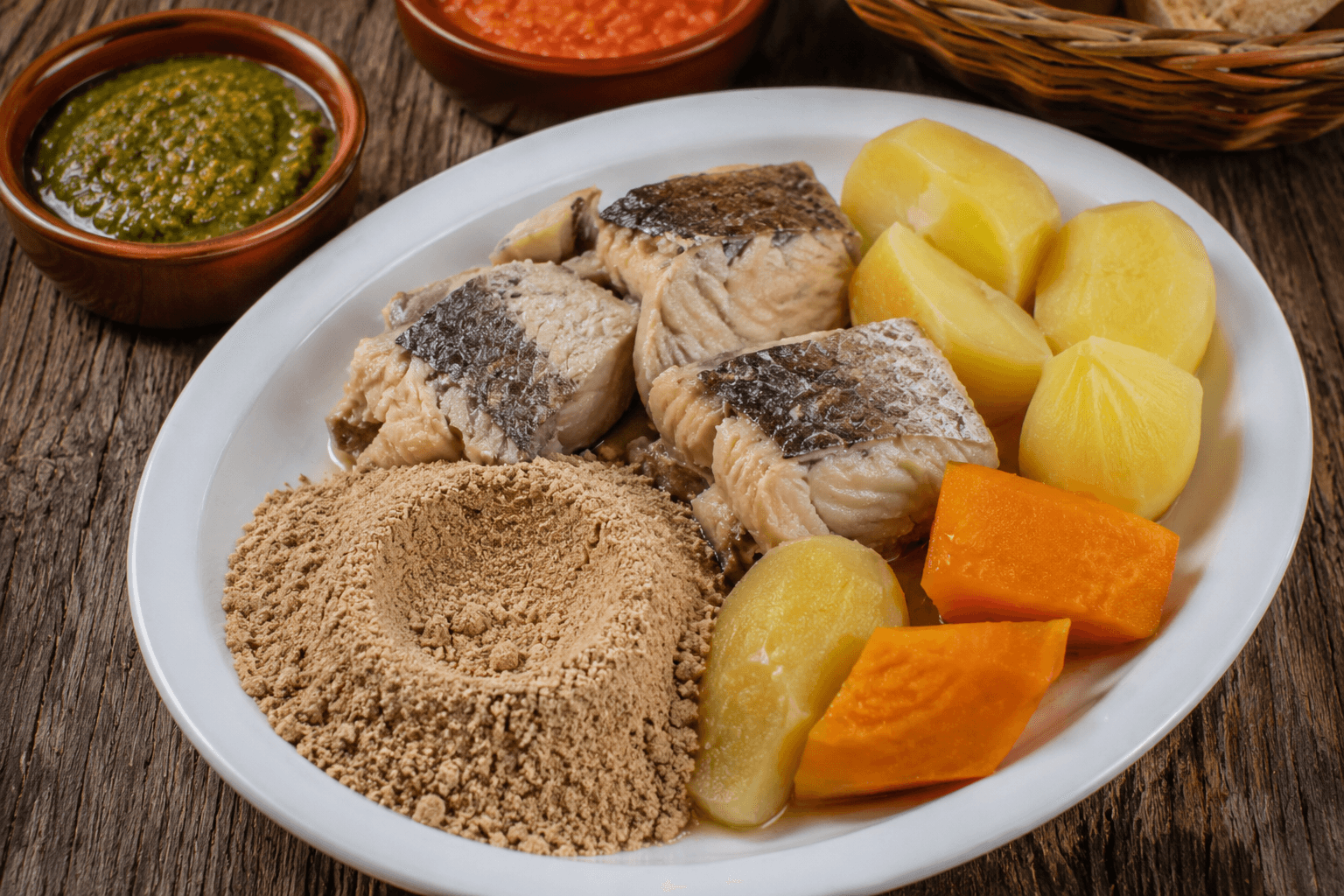
Salted fish (mainly wreckfish or sea bass)
Canarian potatoes
Sweet potatoes
Gofio
Water
Green mojo or red mojo
Sometimes it is also served with fresh onions or tomato salad to add an even more refreshing touch.
Traditional preparation
The salted fish is first desalted for several hours to mellow its flavor.
It is then cooked with potatoes and sweet potatoes until tender and juicy. Meanwhile, the gofio is traditionally prepared by kneading it with some of the cooking broth, forming small portions to accompany the dish.
The dish is served with mojo sauce, whose intense aroma adds balance and character to the recipe.
The combination of flavors is simple yet extraordinarily representative of Canarian cuisine.
Local or Regional Significance
Canarian sancocho is one of the greatest culinary symbols of Fuerteventura and the entire archipelago. Each of its ingredients speaks to the history of the islands, their relationship with the sea, and the ability of their inhabitants to adapt to the conditions of the territory.
In Betancuria, this recipe is part of the local cultural and gastronomic heritage, conveying values such as making the most of resources, tradition, and respect for local produce.
Beyond its culinary value, sancocho is an expression of identity that offers a deeper understanding of the island’s history and customs.