

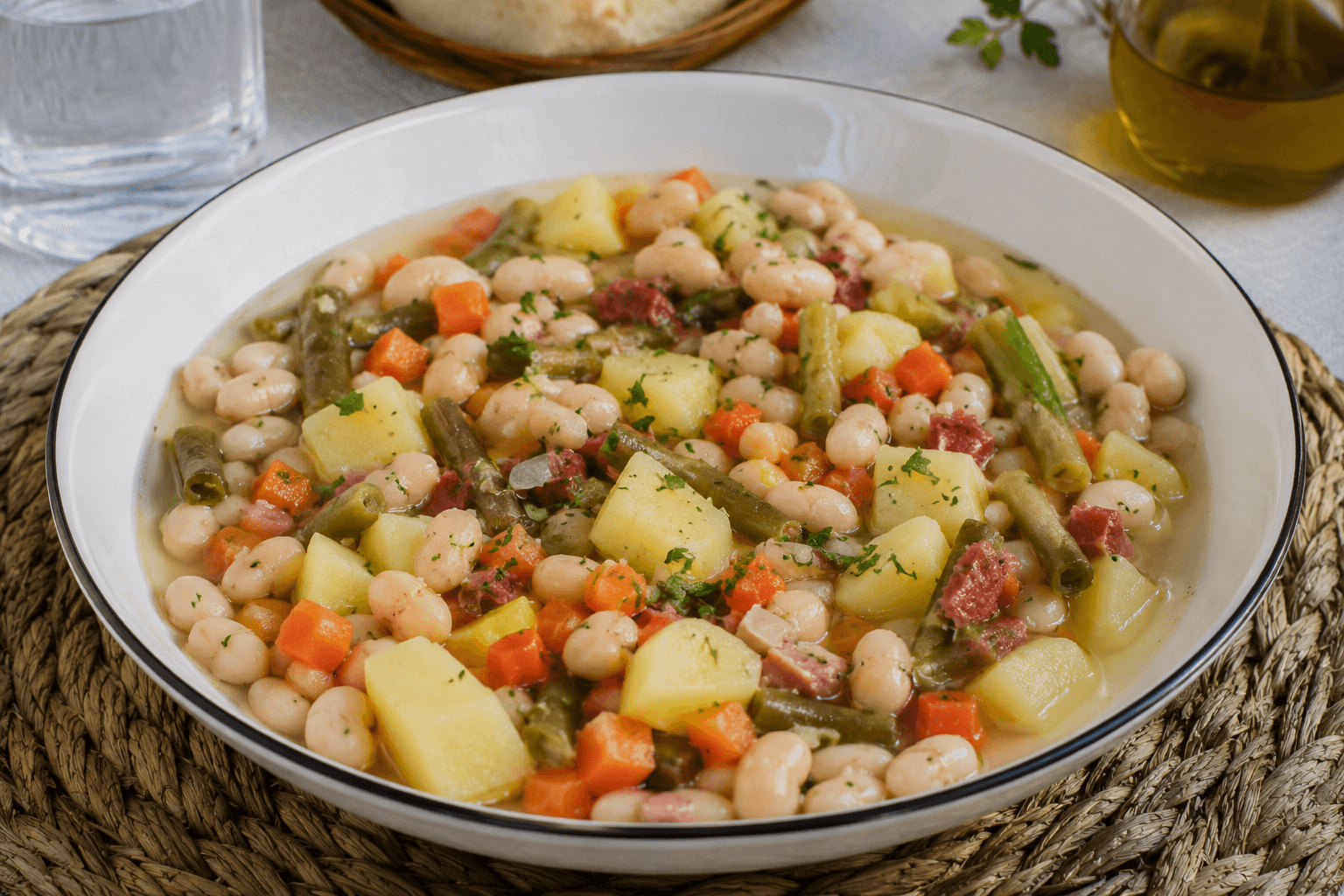
Arties's Cold Aranese Stew
In the heart of the Aran Valley, surrounded by some of the most spectacular landscapes in the Pyrenees, Arties preserves a rich culinary heritage where the mountains, the climate, and local traditions have shaped cooking

The traditions of the Aran Valley adapted to the flavors of summer
In the heart of the Aran Valley, surrounded by some of the most spectacular landscapes in the Pyrenees, Arties preserves a rich culinary heritage where the mountains, climate, and local traditions have shaped cooking styles for centuries. Although Aranese cuisine is known for its hearty winter dishes, there are also lighter dishes that allow you to enjoy traditional ingredients during the warmer months.
Among these, the Aranese stew—served cold or warm—stands out. Inspired by the valley’s most iconic recipe, it has been adapted to become an ideal summer dish. Made with legumes, vegetables, and local ingredients, this dish preserves the essence of Aranese cuisine while offering a fresher, lighter dining experience.
A Cuisine Born Among the Mountains
Arties’ cuisine reflects the close relationship between its inhabitants and the Pyrenean environment. For centuries, the long cold seasons fostered the development of nutritious dishes capable of providing energy to shepherds, farmers, and valley residents.
The Aranese stew is probably the best example of this culinary tradition. Considered one of the great gastronomic symbols of the Aran Valley, it has evolved over time, giving rise to lighter versions that allow people to continue enjoying its ingredients during the summer months.
In Arties, where nature tourism attracts thousands of visitors each year, these reinterpretations allow visitors to discover traditional flavors from a more contemporary perspective, adapted to the season.
Gastronomic Context
Aranese cuisine differs from other Pyrenean cuisines due to the historical influence it has received from both Catalonia and southern France. This blend of cultures has given rise to a unique repertoire of recipes featuring mountain produce, legumes, meats, and seasonal vegetables.
During the summer, lighter dishes take center stage, making the most of the valley’s fresh produce and the pleasant temperatures that characterize this time of year.
Common Ingredients
The summer version inspired by the Aranese stew is typically made with:
Cooked white beans
Potatoes
Carrots
Fresh scallions
Green beans
Tomato
Extra virgin olive oil
Mountain herbs
Salt and pepper
Some versions include small amounts of local cured meats or shredded cooked meat to stay true to the original recipe.
Traditional preparation
The legumes and vegetables are cooked separately until they reach a tender texture without losing their firmness.
Once cooled, they are carefully mixed with fresh vegetables and dressed with extra virgin olive oil, aromatic herbs, and a light touch of vinegar.
The result is a balanced, nutritious, and very refreshing dish that preserves the essence of Aranese cuisine while being perfect for the warmest days of the year.
Served cold or slightly warm, it’s an excellent choice for enjoying local cuisine after a day of hiking or exploring the valley.
Local or Regional Significance
This recipe reflects the ability of Aranese cuisine to evolve without losing its roots. The ingredients come from the same region that has shaped the traditional diet of its inhabitants for centuries, maintaining a direct connection to the landscape and local customs.
Furthermore, it highlights key products of mountain agriculture and demonstrates how traditional recipes can adapt to new ways of eating without sacrificing their identity.