

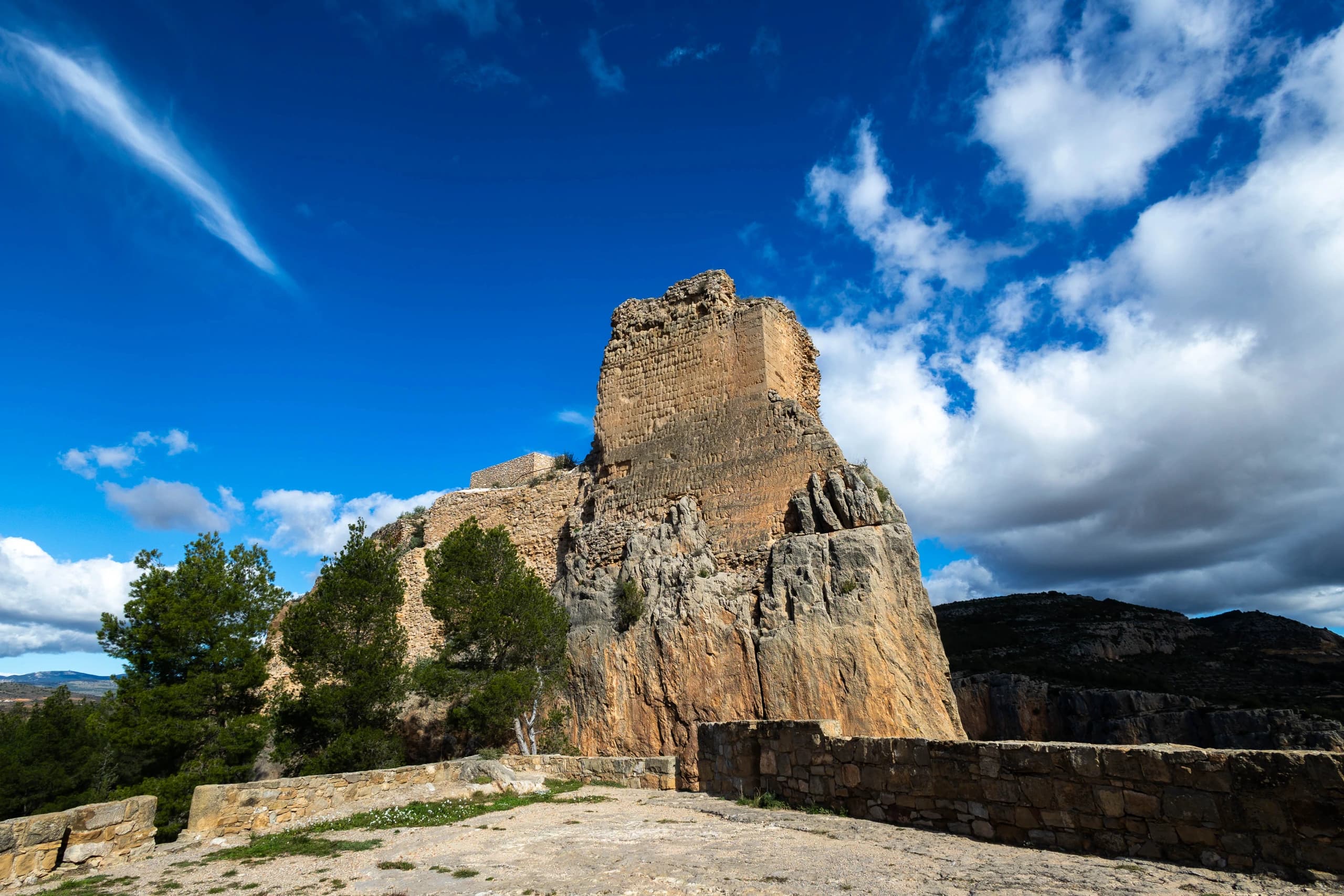
Alpuente Castle: A Journey to the Edge of History
Alpuente Castle, which dates back to the Caliphate period (9th century), stands as the original settlement from which the town that controlled access through the valley grew.

Alpuente Castle, dating back to the Caliphate period (9th century), stands as the original nucleus from which the settlement that controlled the passage through the valley emerged. The presence of the Albarrana Tower, with its characteristic Caliphate masonry, and the remains of ancient dwellings in the citadel area confirm this early occupation. All of this reveals how the access points to the plateau—which served as an “albacara”—were secured, providing refuge for the population and livestock and functioning as a military camp.
Between the 11th and 12th centuries, the growing population spurred the construction of dwellings within the enclosure, forming a true alcazaba. The wall and towers that today define the fortress’s imposing western façade also date from this period.
After the fall of the Taifa in 1236, the territory became part of the Crown of Aragon, serving as the center of control and administration for the Bailiwick of Alpuente, as well as the residence of the Bailiff and his garrison.
Alpuente Castle was the scene of numerous battles due to its strategic location at the confluence of three borders: Castile, Aragon, and Valencia. After the War of Succession and the arrival of the Bourbons under Philip V—and in retaliation for support of the candidate from the House of Habsburg—orders were given to demolish the castle between 1707 and 1713.
Although the upper part was dismantled or left in ruins, the castle regained prominence during the First Carlist War when it was occupied in 1835 by Cabrera’s Carlist troops.