

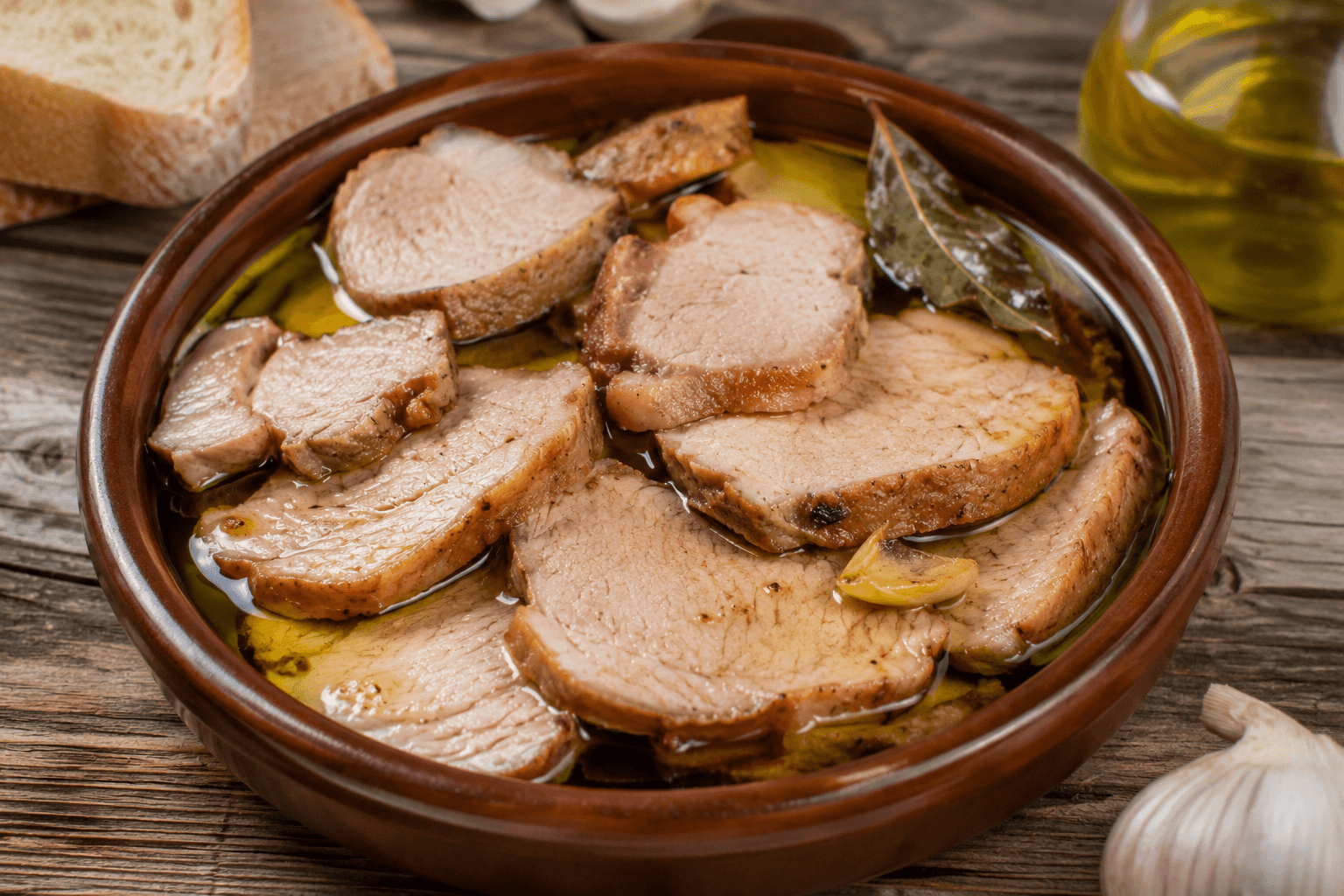
Baños de la Encina's Orza Loin
Baños de la Encina—one of the most beautiful towns in Andalusia—stands out not only for its impressive historical and natural heritage, but also for its cuisine, which is deeply rooted in the rural traditions of the Sier

A culinary gem of the Sierra Morena that can also be enjoyed in the summer
Baños de la Encina, one of Andalusia’s most historic towns, stands out not only for its impressive historical and natural heritage but also for a cuisine deeply rooted in the rural traditions of the Sierra Morena. Among its most representative dishes is lomo de orza, an ancestral preparation that for centuries allowed meat to be preserved and that today remains one of the great culinary symbols of the province of Jaén.
Although traditionally eaten year-round, lomo de orza is especially appreciated in summer when served cold or accompanied by salads, fresh garden tomatoes, and village bread. Its intense flavor and tender texture make it a true delight for those who wish to discover the most authentic cuisine of inland Andalusia.
A recipe born of necessity and turned into tradition
Before the advent of modern refrigeration systems, families in Baños de la Encina developed various techniques to preserve food for long periods. One of the most common methods involved marinating pork and storing it in large earthenware jars covered with olive oil.
This method kept the meat in perfect condition for months and ensured a reliable source of high-quality food for rural families.
Over time, “lomo de orza” evolved from being merely a preservation technique into one of the region’s most prized culinary specialties.
Gastronomic Context
The cuisine of Baños de la Encina is deeply rooted in olive oil culture, livestock farming traditions, and the influence of the Sierra Morena.
Pork products have historically played a prominent role in the local diet. “Lomo de orza” is likely one of the recipes that best represents this culinary heritage, combining simplicity, quality, and tradition.
Today, it continues to be a staple on family tables and is featured on the menus of many restaurants in the region.
Common Ingredients
The traditional recipe is made with:
Pork loin
Extra virgin olive oil
Garlic
Paprika
Oregano
Bay leaf
Salt
Pepper
The quality of the olive oil from Jaén is essential to achieving the characteristic flavor of this dish.
Traditional preparation
The pork loin is marinated for several days with garlic, paprika, oregano, and aromatic spices.
It is then slowly cooked in extra virgin olive oil until tender and juicy. Once prepared, it is preserved submerged in the oil itself inside traditional clay pots known as orzas.
This process allows the meat to absorb all the aromas of the marinade and maintain an exceptional texture.
During the summer, it is usually served cold, sliced thinly, and accompanied by seasoned tomatoes, olives, or artisanal bread.
Local or Regional Significance
Lomo de Orza encapsulates centuries of Baños de la Encina’s culinary history. Its preparation reflects the importance of pork in the region’s traditional economy and highlights one of Jaén’s most iconic products: extra virgin olive oil.
Every bite connects visitors to a way of life based on making the most of resources, preserving food, and respecting local products.
You can try this dish in:
Baños de la Encina (Jaén)
Discovering Baños de la Encina means delving into a land of castles, olive groves, and centuries-old traditions. The lomo de orza is