

Valverde de los Arroyos: Its Rich Heritage

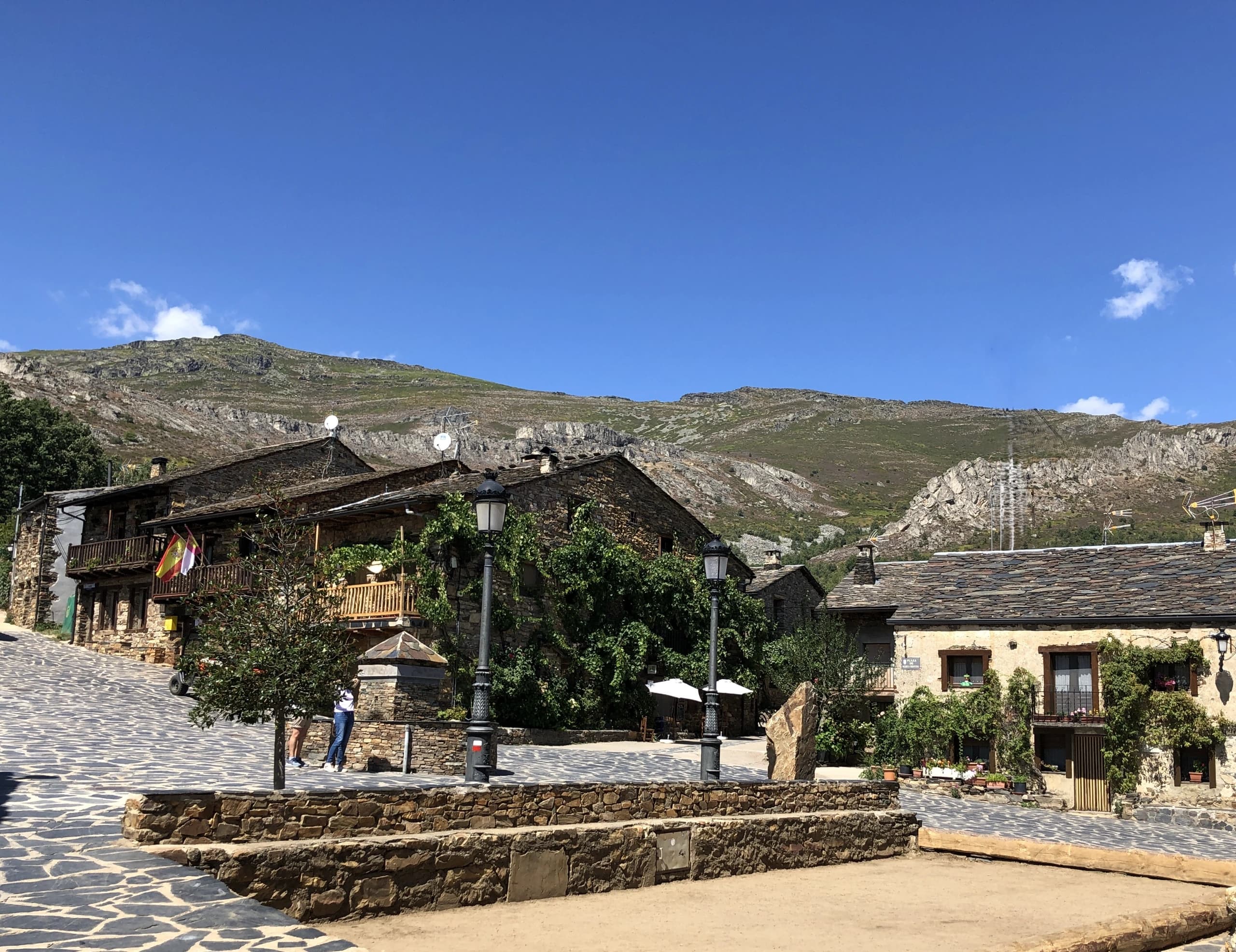
The main tangible heritage of Valverde de los Arroyos and Zarzuela lies in the collection of buildings that define its architecture, which is part of the region known as “black architecture.”
v The houses are built with blocks of slate and quartzite and are also covered with slate roofs. The town’s and region’s zoning regulations require the use of only materials and construction styles native to the area. Some clay ovens, the blacksmith’s forge, and the communal oven in Zarzuela have been preserved, as have houses, corrals, tainas, cairns, bridges, and other structures in the village and its surroundings, all of which form part of a traditional architectural heritage worthy of preservation. There are also remains of old structures that once served as mills and fulling mills.
The town stands out for its rugged terrain, lush vegetation, and spectacular landscapes that more than meet the expectations of hiking and nature lovers
v The natural heritage in our area includes various sites designated as “protected natural areas”: Site of Community Interest in the Sierra de Ayllón: Special Area of Conservation (SAC), part of the Natura 2000 network, and Special Protection Area for Birds (SPA), as well as the Sierra Norte de Guadalajara Natural Park.
Although there is no major archaeological site, the area offers some surprises.
v We can highlight the post-Paleolithic cave paintings (5000 BC) in the Ocejón or Reloje Caves, which have been extensively described in various publications.
v There are remains of mines excavated in the ground that were never exploited or put into production, including sites in the areas of “Los Atezares,” “La Fragüela,” and “El Recuenco.”
Religious buildings.
v The church, dedicated to Saint Ildefonso, is located in the center of the village and features an Arabic-style tiled roof. Its current structure dates from 1854, and the dome was rebuilt in 2011 using a technique of interlocking brick arches in a Mudejar-style. Its processional cross, created by Diego Vallés in the early 16th century, is its most important heritage feature.
v