

The Wall
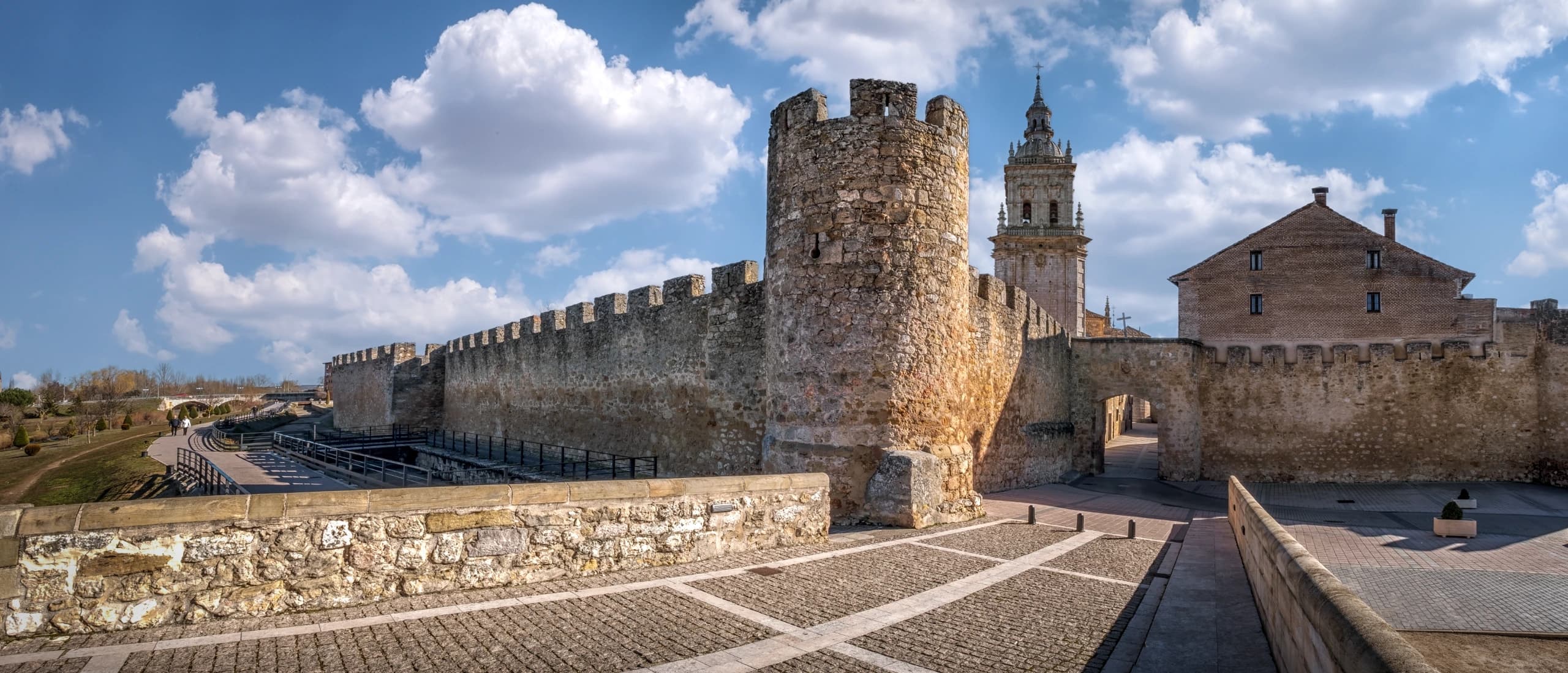
The city wall encloses the medieval center of Burgos. It was built by Bishop Montoya in 1458 in response to the situation Castile was facing during the reign of Henry IV, as he did not consider the fortress of Osma to be

The Wall
15th century
The city wall encloses the medieval center of Burgos. It was built by Bishop Montoya in 1458 in response to the situation facing Castile during the reign of Henry IV, as he did not consider the fortress of Osma sufficient to defend the town.
The wall, constructed of rubble masonry with limestone blocks at the corners for reinforcement and crowned with battlements, is preserved in some sections. Its route, starting at the Puerta del Puente Viejo, ran along the river, turning at the intersection with Calle del Cubo (today Poeta Malo de Molina), crossed Calle Mayor, reached what is now Calle Rodrigo Yusto, passed in front of the Seminary, and curved in front of the Convent of El Carmen; from this point, the wall continued to the Puerta del Puente.
Several gates opened along the wall, but the only one that remains is the San Miguel Gate, which was renovated during the tenure of Bishop Tello (1567–1578), as indicated by its coat of arms.
Montoya ordered the construction of the wall for defensive reasons, but this was not the only function it served throughout history. Protection against plagues and various infectious diseases was a matter of special concern for municipal leaders.
The wall facilitated the collection of taxes on goods entering the town and also played a central role in ceremonial events with strong symbolic significance, most notably the entry of bishops arriving in El Burgo to take office. The prelate and his entourage would stop before the gate through which they were to enter; then a representative of the town would ask the bishop to swear, before passing through, to uphold its customs, rights, and praiseworthy traditions just as his predecessors had done; after taking the oath, the bishop would receive the keys to the town, and thus, as its spiritual and temporal lord and master, he would pass through the gate.