

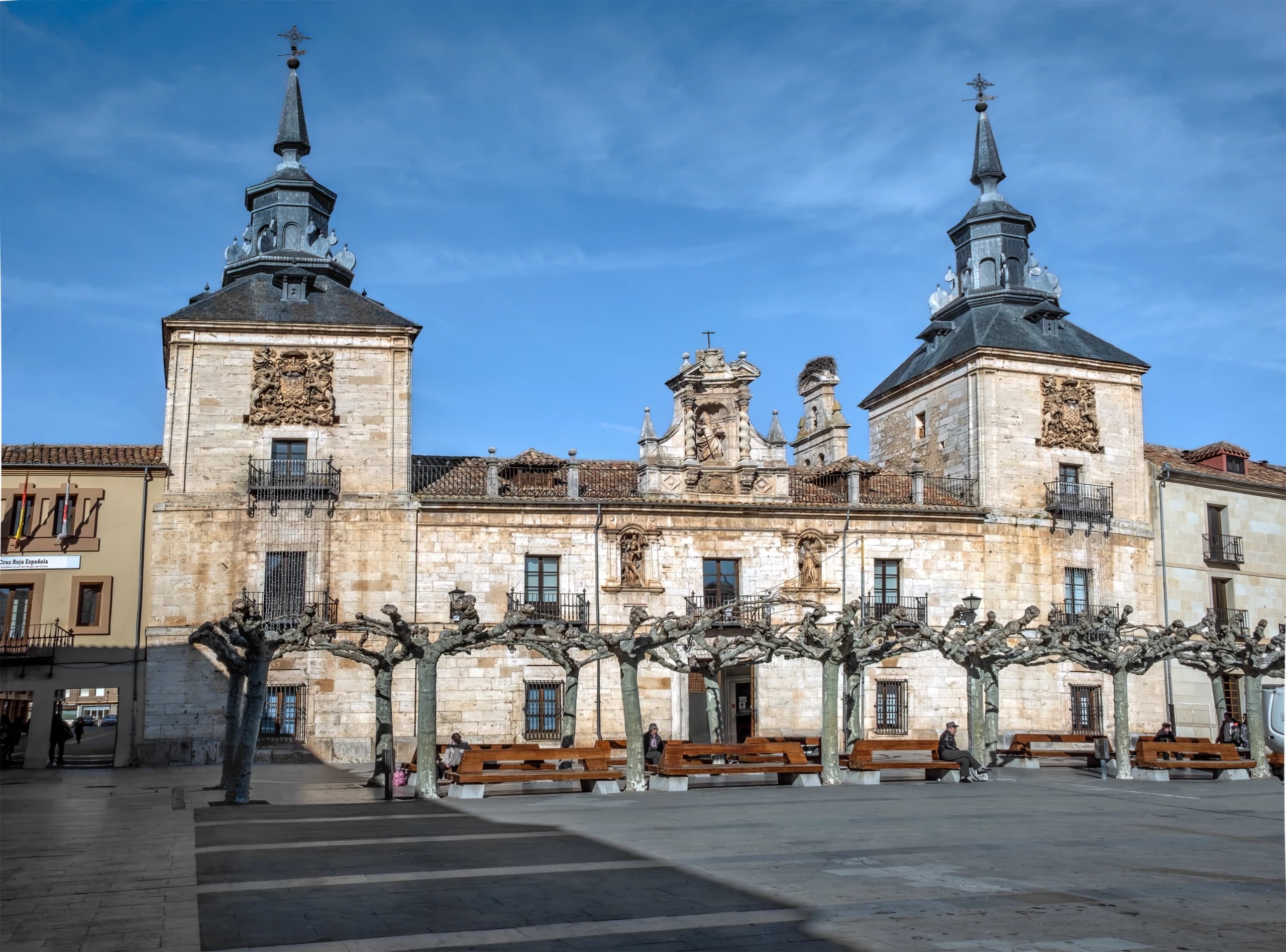
San Agustín Hospital
The building that once housed the Hospital de San Agustín was constructed at the expense of Bishop Sebastián de Arévalo y Torres. Construction began in 1694 and was completed in 1701. In the 15th century, Bishop Montoya

San Agustín Hospital
17th–18th centuries
The building that once housed the San Agustín Hospital was constructed at the expense of Bishop Sebastián de Arévalo y Torres. Construction began in 1694 and was completed in 1701. In the 15th century, Bishop Montoya had founded a hospital named San Agustín within the city walls. This hospital had become obsolete, both due to its size and its location, and Bishop Arévalo recognized this; nevertheless, he retained the name under which Montoya had founded it.
The name of the architect who designed this monumental structure is unknown; its construction was overseen by Ignacio Moncaleán and Pedro Portela, at a cost of more than 80,000 ducats.
The hospital follows the “Casa de Austria” palace model, an alcázar-style structure with a rectangular façade flanked by two pyramidal towers. The splendid, strictly symmetrical façade features two fluted niches housing statues of Saint Sebastian—the patron saint sharing the same name as the bishop who commissioned the building—and Saint Francis, as this prelate belonged to the Franciscan Order.
In the center, above the main door and balcony, stands a niche at the base of which is Bishop Montoya’s coat of arms. This prelate’s coat of arms appears between the corbels supporting the Solomonic columns that flank the fluted niche where the sculpture of Saint Augustine, patron saint of the Hospital, is placed. The niche is crowned by a triangular pediment that is broken to accommodate the coat of arms of Arévalo. On either side of the central section stand towers topped with spires. On their facades, above a balcony, are the coat of arms of Bishop Arévalo, characterized by a rich Baroque style.
This façade serves as a bridge between the austerity of the early Baroque—with a strong Herrerian influence—and the High Baroque.