

The refajonas (EN)

In Níjar, the refajonas represent one of the most striking, delicate, and recognizable expressions of the town’s folk culture—a festive costume that not only preserves the elegance of a bygone era but also the memory of a world of music, hairstyles, gestures, and dances deeply rooted in the identity of Níjar.
The traditional costume of Níjar, revived as a symbol of beauty, tradition, and folklore.
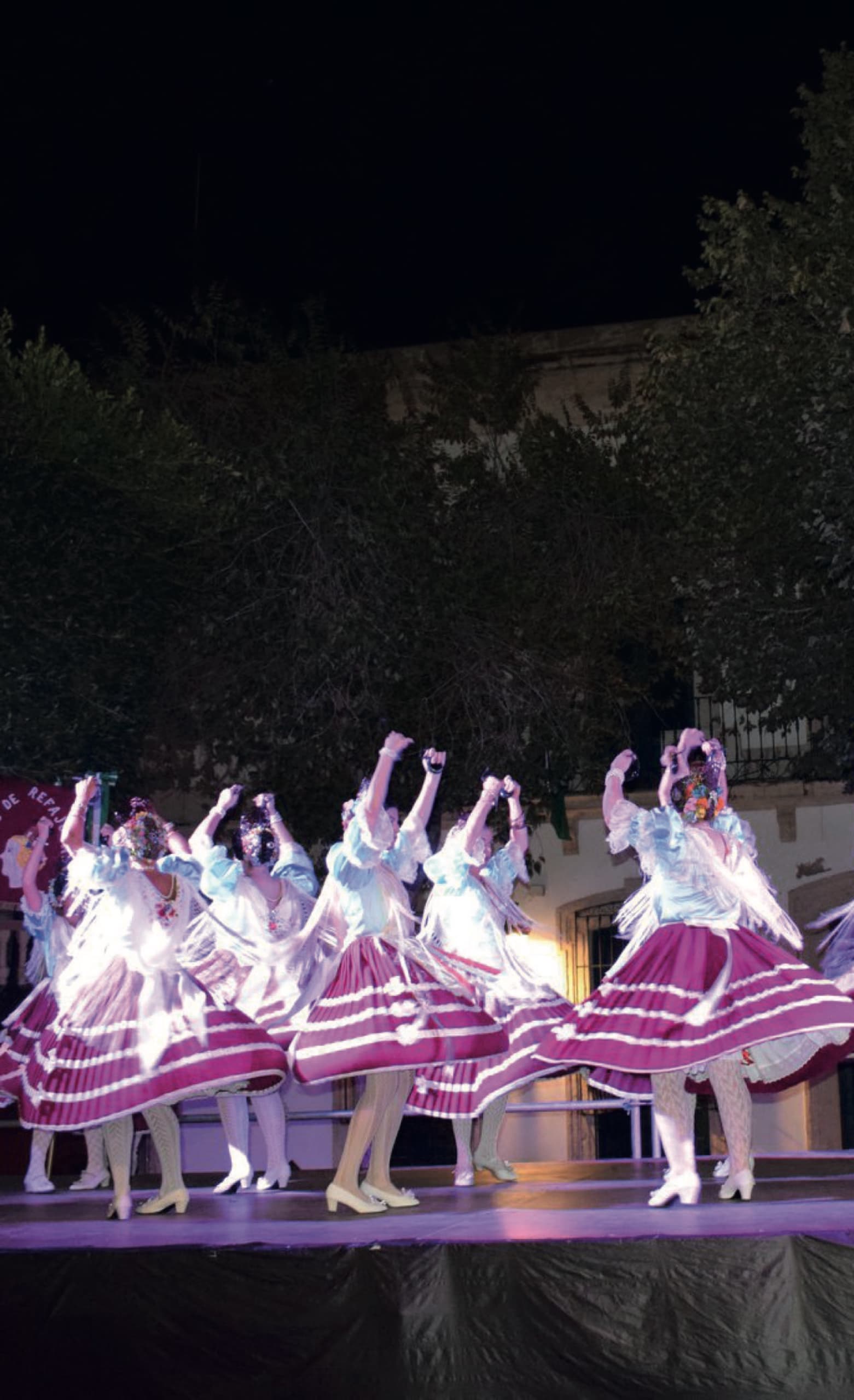
The refajonas costume is one of the most distinctive images of Níjar. Its presence evokes a festive tradition of great visual richness, in which women’s attire takes center stage and becomes an emblem of the town. Its appearance is reminiscent of other Levantine garments, a connection often linked to the historical resettlement processes following the expulsion of the Moriscos, when settlers from regions such as Valencia and Murcia arrived in these lands. Whatever its precise origin, the fact remains that Níjar has made this costume a distinctive and fully recognizable hallmark of its own identity.
What is most striking about the refajonas is the meticulousness of the ensemble. It is not merely an outfit, but a complex composition in which every element counts. The hairstyle, particularly labor-intensive, constitutes an essential part of this aesthetic identity: a center part, no bangs, two elaborate side buns made with hairpins, and a back bun crafted from several strands, atop which combs, a hairpin, fabric flowers, and natural vines are placed. All of this results in a silhouette of great visual impact, rich in volume, balance, and ornamentation.
The most distinctive feature:
One of the defining features of the refajonas is the inseparable union between costume, hairstyle, and adornment. Necklaces, brooches, flowers, shawls, and the refajo do not appear as isolated elements, but as part of a very distinct festive language, where the abundance of ornamentation expresses solemnity, beauty, and popular pride.
The attire consists of several pieces that enrich the ensemble and reinforce its ceremonial character. The blouse, the Manila shawl, the refajo, the petticoats, the apron, the knitted stockings, and the white-heeled shoes with bows create an image of great elegance, both folk-inspired and refined. Light-colored ribbons or bands stand out on the skirt, while the neck and chest adornments add a sumptuous dimension that makes this costume one of the most striking expressions of Almeria’s folklore.
But the refajonas cannot be understood solely through their attire. Their full meaning is linked to the Níjar fandango, a courtship dance that forms part of the municipality’s intangible heritage and which the Las Refajonas Cultural Association has played a decisive role in reviving and keeping alive. Thanks to this work, the costume has ceased to be a relic of the past and remains present in celebrations, performances, and moments when Níjar’s popular culture is displayed in all its character.
In this way, the refajonas embody a tradition that goes beyond the visual. They speak of collective memory, of transmission across generations, and of a community that has managed to preserve its own aesthetic as a way of affirming its identity. In Níjar, to contemplate this costume is to glimpse a culture of faith