

The flavours of the gastronomy of Segura de la Sierra (EN)

The culinary culture of Segura de la Sierra is rich and full of tradition, where the agricultural customs have been combined with those of the shepherds, or those dedicated to the timber work that has been carried out for centuries in the many pine forests of these mountains. There is a wide variety of typical dishes in Segura de la Sierra, all of them characterised by the products found in the area. Among these ingredients we can highlight the olive oil, which is produced here with denomination of origin and with an extreme quality, the mountain meat in hunting season, such as wild boar, partridge or hare, the meat of oveja segureña, a characteristic sheep of the Sierra de Segura, and the quality of the horticultural products. If we look at specific seasons we can also highlight the mushrooms and Níscalos, or "Guízcanos" as they are called in the area, as well as the asparagus that grow in abundance in the Sierra, weather permitting.
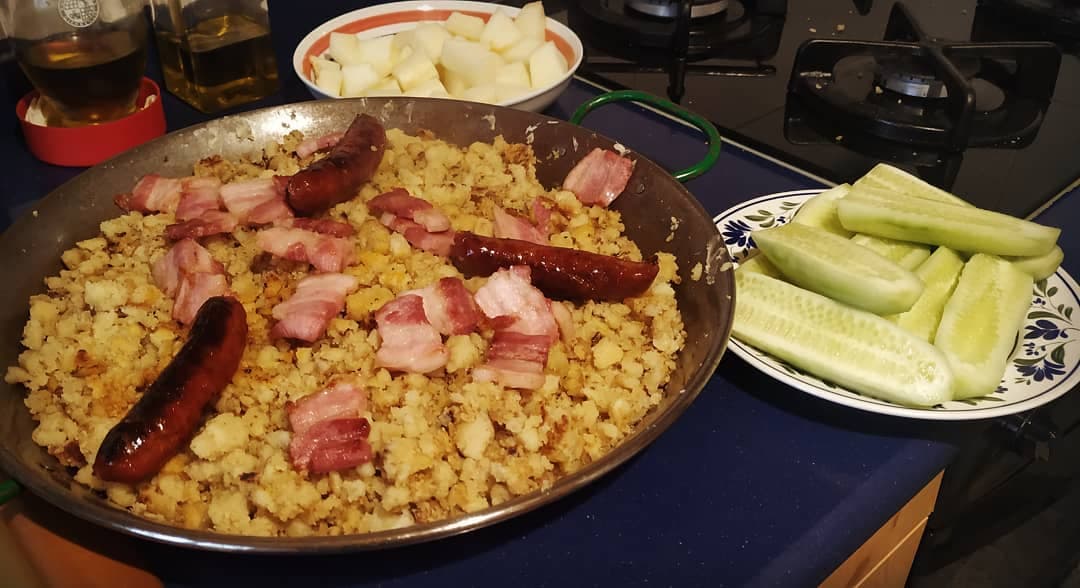
With these raw materials of unquestionable quality a great diversity of typical dishes are prepared. We can start with the "Galianos", a stew made with cakes of bread, rabbit and spices, the "Andrajos", which are prepared this time with cakes of flour, meat and spices. Also the "Migas" both bread and flour or the "Gachamiga", a kind of flour and potato omelette that is accompanied with all kinds of sweet and savoury toppings. Vegetable and legume stews such as beans are also very typical of this area.
From the shepherds' tradition have come down to us the stews made with meat from the local sheep, such as "cordero en ajillo pastor", "caldereta pastora", or the very widespread "cordero en ajo cabañil". The so-called "pisto gandul", made with lamb, goat or rabbit meat, which is cooked in tomato and olive oil, and which was prepared in advance to be eaten later, at fairs, festivals or wakes, hence the origin of its name, is very peculiar. The way of preparing salted "cecina" made from sheep or goat meat, known here as "salon", is also very old.
On slaughter days, a social and culinary rite of great importance in the villages, in addition to the preparation of black pudding, chorizo and marinated pork loins, the "ajo-pringue" is cooked here, which is shared by all the guests at the slaughter, It is made in happy conjunction with chopped pork liver, spices and olive oil, and in some villages in the Segura region it is also accompanied by grains of wild aniseed and chopped fried walnuts, which give it an appetising and pleasant flavour. As part of these 'matanceros' rites, and as a way of concluding them despite the fact that some months have passed, there is the custom in Segura of unsealing the 'orzas' on the day of Santa Quiteria - 22 May - the advocate and protector of the disease of rabies. On that day in Segura de la Sierra, the seals or seals made with plaster strips were removed from the lids of the daggerboards, where the different pork sausages from the previous slaughter were kept in lard. Also in Santa Quiteria the Hornazos are made, a dessert similar to oil cakes with a hard-boiled egg in the centre.
Calorific dishes prepared for the hard work in the fields, whether in farming, shepherding or forestry work. Local dishes, often humble but of great flavour and quality. These are some of the main characteristics of typical mountain gastronomy.