

Lebaniego Stew (EN)

Cocido lebaniego is much more than just a dish: it is the culinary soul of the Liébana Valley. A hearty and generous stew that originated in the kitchens of the villages at the foot of the Picos de Europa, made with produce from the land and meat from animals reared on the farm.
of
Its origins date back to medieval times, when the monks of the Monastery of Santo Toribio de Liébana prepared it as a comforting meal for pilgrims arriving in the valley. Since then, every household in Liébana has had its own version.
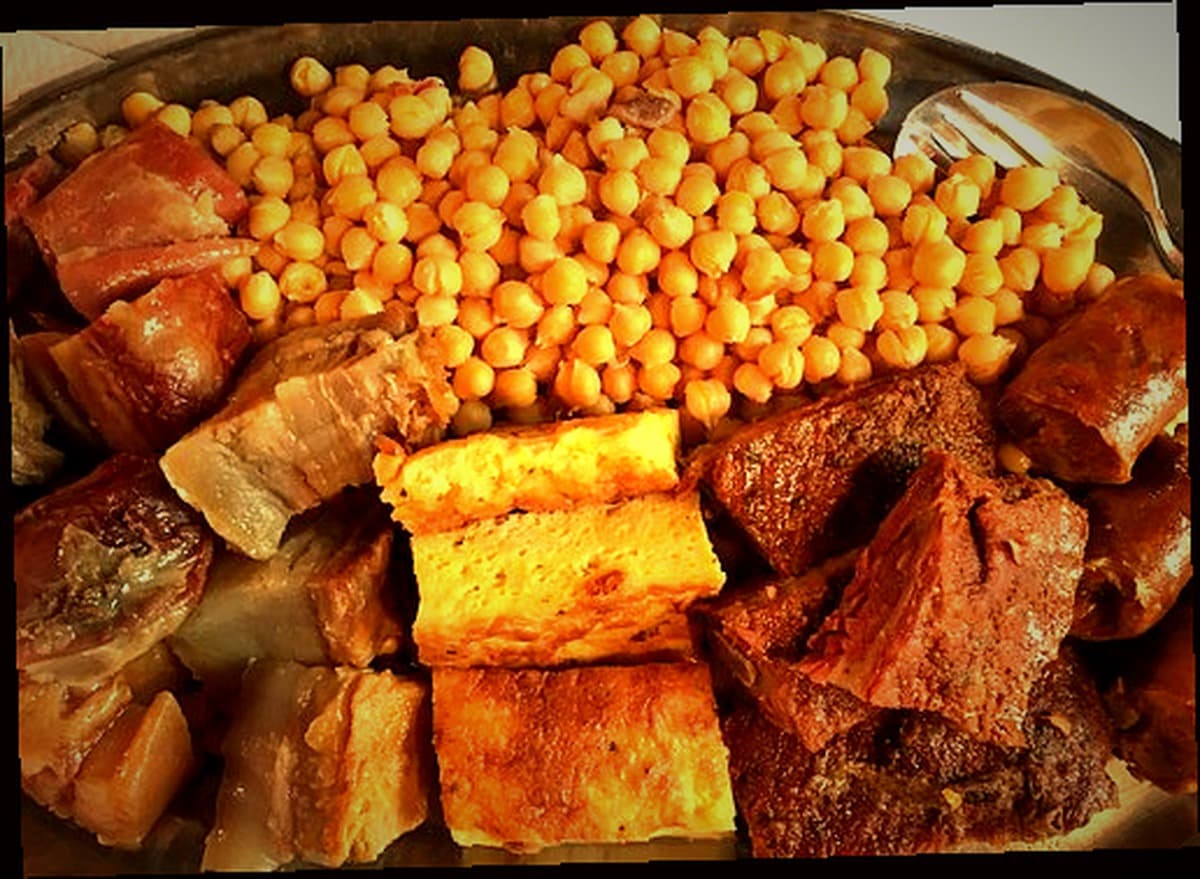
There are three key ingredients: chickpeas from Potes — small, tender, of the ‘pedrosillano’ variety —, cabbage, and ‘compango’, a selection of pork cuts including chorizo, bacon, black pudding, ribs, cured beef and ham bone. All of this is simmered slowly until a hearty broth is achieved, with an intense reddish colour and deep flavour.
But what sets the Lebaniego stew apart from any other Spanish stew is the filling: dumplings made from breadcrumbs soaked in milk, chopped chorizo, parsley, egg and a pinch of bicarbonate of soda. They are fried in olive oil until fluffy on the inside and golden on the outside, and then left to soak up the broth. For many, they are the best part of the dish.
It is served in three courses:
First , the thin noodle soup with the cooking broth and the dumplings floating on top. Second , the chickpeas with the cabbage seasoned with a sauté of garlic and paprika. Third , the meats of the compango: a piece of each arranged on a platter, so that no one misses out on trying everything.
The stew was traditionally prepared in a cast-iron pot over a low heat, simmering for three and a half hours and filling the whole house with an unmistakable aroma. It was — and still is — a winter dish, for long days in the fields, for large families sitting around a table with loaves of bread and local red wine.
InPotes, the capital of the Liébana region, the Cocido Lebaniego is the dish that defines the town’s culinary identity. It can be sampled in the restaurants of the historic centre, where each establishment maintains its own inherited version. It is also the star of the Fiesta del Cocido Lebaniego, a celebration that brings together thousands of visitors every year around the steaming pots in the town square.
A stew eaten in three courses, with loaves of bread and local wine, whilst the peaks of the Picos de Europa loom in the background — this explains why Liébana has clung to this recipe for centuries.
Eating a Cocido Lebaniego at Potes, with the San Cayetano bridge on one side and the medieval towers on the other, is to realise that this village preserves its heritage not only in stone, but also in every spoonful.