

Migas de Pastrana (EN)

Migas is the dish that best sums up the character of Pastrana: humble in its origins, resounding in its flavour, and deeply rooted in the life of the Alcarreño countryside. A shepherds' breakfast that today is the gastronomic jewel of the ducal town of Guadalajara.
Born as food for shepherds to endure the long days in the fields of the Alcarria, migas were the first snack of the day before leaving with the flock. In Pastrana, a town through which Camilo José Cela passed in his famous "Journey to the Alcarria", the migas tradition has survived intact for centuries.
The recipe starts with an ingredient that couldn't be simpler: hard bread from the day before, cut into small pieces and lightly moistened with water the day before, covered with a damp cloth to bring it back to life without becoming soggy. The next day, these crumbs are fried slowly in a frying pan with plenty of olive oil, whole garlic and paprika, along with pieces of bacon, bacon and chorizo, which release their fat and impregnate each crumb with flavour.
The secret is patience: you have to stir non-stop for twenty or thirty minutes over medium heat, without squashing them, until they are browned, loose and crispy on the outside but tender on the inside. It is a dish that requires you to keep an eye on the frying pan, which is why migas have always been made in company, chatting around the fire.
The pastranero style:
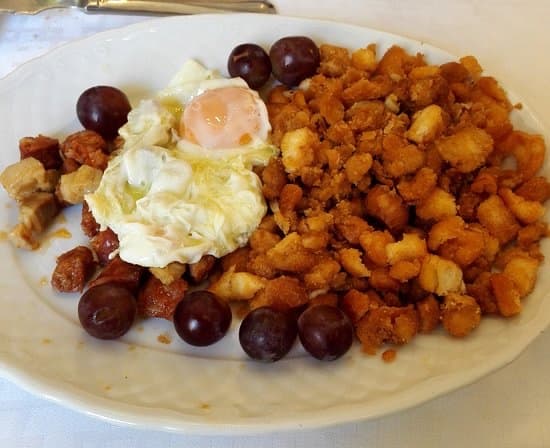
In Pastrana, migas are served in the style of the land: topped with a fried egg with shiny yolk, accompanied by fresh grapes that contrast with the pork fat, and with pieces of chorizo crumbled and slices of crispy bacon around them. A hearty dish served on a sharing platter in the centre of the table.
Migas form part of the menu in Pastrana throughout the winter, along with gachas - made with almond flour -, and both are the stars of the popular meal of San Sebastián, patron saint of Pastrana, when the villagers gather every January in the convent to share these dishes prepared by local cooks. This tradition has been documented for more than three centuries.
The gastronomy of Pastrana is completed with miel de la Alcarria, with Designation of Origin, which is not only sold in the town's shops but also appears as an ingredient in many local dishes. And for dessert, pastry from Pastrana: dobladillos, yemas de Santa Teresa and bizcochos borrachos (sponge cakes).
A shepherds' dish made with hard bread, oil and what the pig gave - served with fried egg and grapes as the Alcarreña tradition dictates. This is how the countryside used to have breakfast and this is how it is still eaten in Pastrana.
To eat some migas in Pastrana, with the Plaza de la Hora a step away and the Ducal Palace of the Princess of Eboli looming between the rooftops, is to understand that the