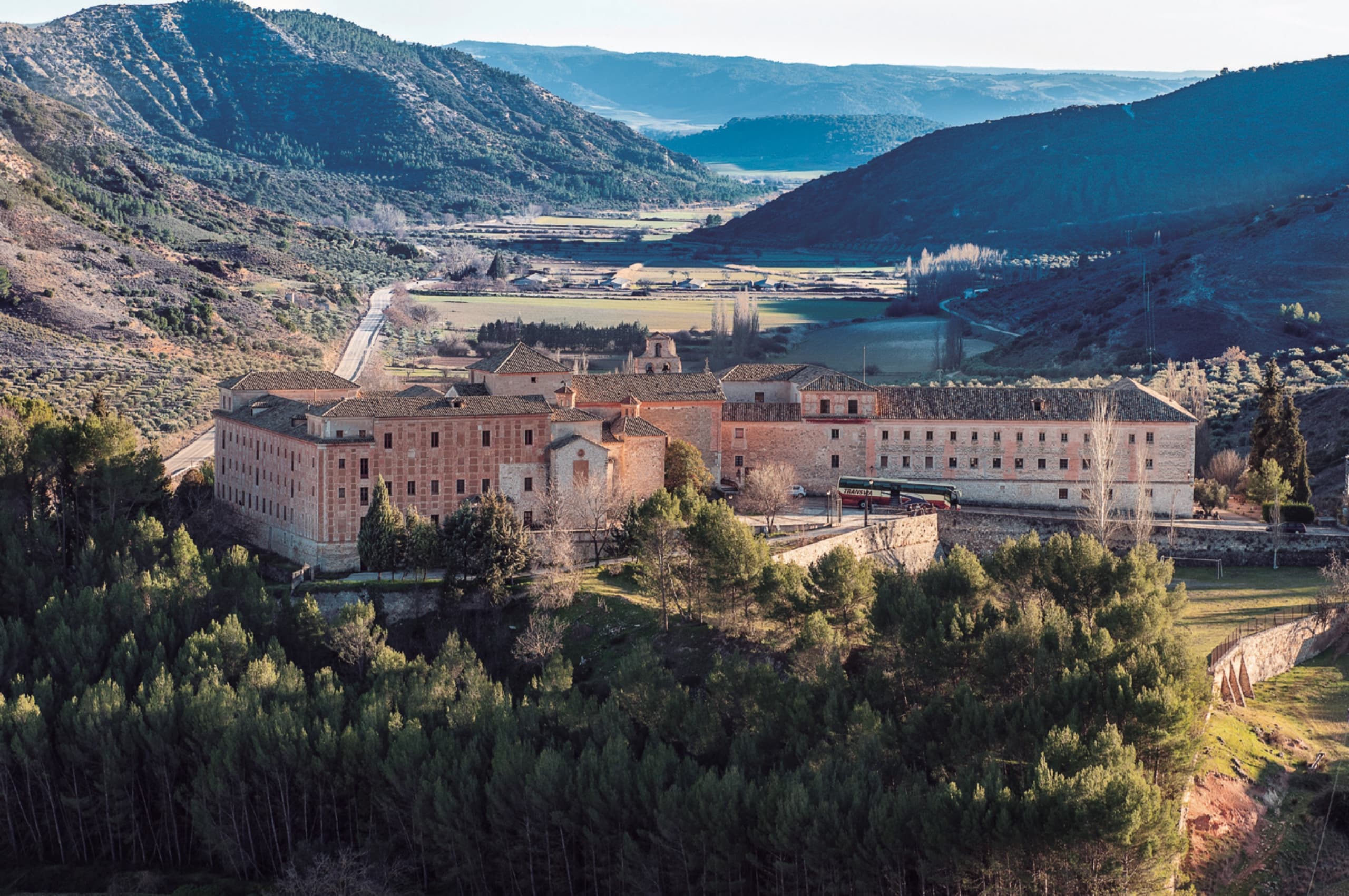
El Carmen Convent (EN)
In Pastrana, the Convent of Carmen is much more than a religious building: it is a key site in the history of the Reformed Carmelite Order, directly linked to two of the most influential figures in Spanish spirituality.
A pivotal site in the history of Carmel in Spain.
Founded in the 16th century by Saint Teresa of Jesus, this convent was established with the purpose of housing a male community within the Carmelite reform. Originally known as the Convent of San Pedro, it was part of the renewal movement that the saint from Ávila carried out in various towns across Castile.
The convent holds unique significance due to the presence of St. John of the Cross, who served here as master of novices. His time at Pastrana makes this site a key location for understanding the spiritual and organizational development of the Discalced Carmelite Order in its early years.
From an architectural standpoint, the complex reflects the sobriety characteristic of the Reformed Carmelites, where functionality and austerity take precedence over ornamentation. Its spaces—the church, cloister, and convent quarters—reflect a way of life centered on contemplation, seclusion, and spiritual discipline.
Today, the convent houses the Carmelite Art Museum, which preserves pieces related to the order and its history, offering insight into the spiritual, artistic, and cultural context in which this community developed.
This space enhances the value of the complex by integrating architectural, historical, and artistic heritage in a single location.
The Convent of El Carmen is not merely a building, but a direct testament to one of the most significant moments in 16th-century Spanish spirituality, where ideas and ways of life that transcended their time took shape.
A place where spiritual history becomes heritage.
One of the most significant sites of the Carmelite Order in Castile.