Ansotano Traditional Costume Day (EN)
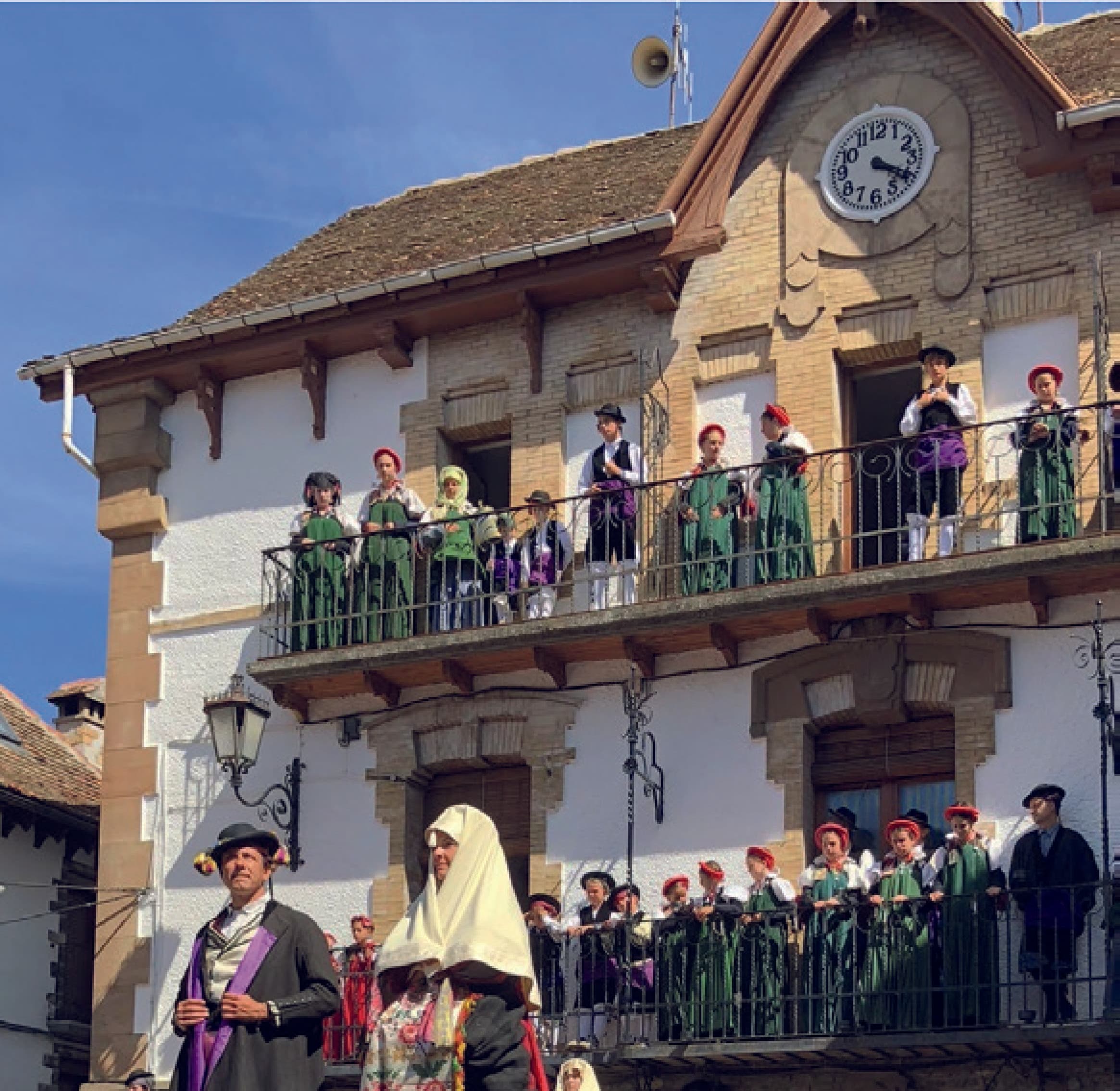
In Ansó, Ansotano Traditional Costume Day is one of the most valuable and exciting folk festivals in Aragon, a day when the entire town once again dons the attire of its ancestors and transforms its streets into a veritable living museum.
A grand folk celebration where Ansó brings its past to life through traditional costumes, customs, and music.
Every last Sunday in August, Ansó offers one of the most beautiful and moving sights on its festival calendar. More than a hundred residents of all ages take to the streets dressed in the costumes that for decades were a natural part of daily life in the valley, bringing back to the present a way of dressing, living, and understanding the world that today constitutes one of the municipality’s greatest cultural treasures. What in other places is preserved only in display cases or photographs continues here to walk the streets with extraordinary dignity and authenticity.
The power of this festival lies in the fact that it does not merely showcase a beautiful costume, but reconstructs an entire world. From the very start, visitors encounter corners of the village transformed into scenes from life of yesteryear: families gathered around the hearth, shepherds resting after their work, children at school, or traditional games that bring the everyday life of another era back to the present. This reenactment is not a tourist gimmick, but a collective tribute to a way of life that Ansó has managed to preserve with admirable respect.
The highlight:
One of the most special moments comes with the parade in the Plaza Mayor, where the various Ansotano costumes are presented and explained to the sound of the rondalla, allowing visitors to appreciate up close the extraordinary richness, variety, and symbolism of this traditional attire.
The Ansotano costume is one of the great ethnographic heritages of the Aragonese Pyrenees. Its variety, complexity, and elegance reveal a material culture of immense richness, capable of distinguishing ages, marital statuses, stages of the life cycle, or specific circumstances of social and religious life. That is why this festival has a value that goes far beyond the visual: each garment speaks of a community, of shared codes, and of a memory carefully passed down within homes, kept in wardrobes and chests for generations.
The day culminates with a solemn mass, choral music, dances, and jotas, so that visitors not only admire the costumes but also engage with a living tradition, made up of sound, gesture, ceremony, and popular participation. The welcome with migas and the festive atmosphere in different corners of the village reinforce that sense of being part of a deeply felt celebration, where the entire community gets involved to offer a genuine and exciting experience.
Declared a Festival of National Tourist Interest, this celebration has become a benchmark of Spanish ethnology precisely because it preserves something very hard to find: a natural relationship between heritage and community. In Ansó, the traditional costume is not a static relic, but a proudly embraced heritage that, at least once a year, once again takes center stage in the life of the village.