

Festivities of the Cross of May (EN)

In Almonaster la Real, the Fiestas de la Cruz de Mayo are one of the most deeply felt, beautiful, and participatory celebrations in the Sierra de Huelva, a tradition where music, ritual, traditional mountain attire, and community spirit transform spring into a truly unique experience.
A festive mountain ritual that fills the crosses of Almonaster and its hamlets with songs, flowers, and emotion.
These festivities, documented for centuries and deeply rooted in local life, are among the most distinctive celebrations in Almonaster la Real. Their value lies not only in their antiquity but also in the extraordinary fidelity with which the town has preserved a complex ceremonial tradition that blends devotion, intangible heritage, and community participation. Each cross maintains its own festive cycle, but all share the same symbolic foundation and the same way of living the tradition.
Five crosses are celebrated in the municipality—Aguafría, La Fuente, El Llano, El Hoyo , and Los Olivos —each with its own character, timing, and community of reference. In the weeks leading up to the festival, the brotherhoods meticulously prepare paper flowers and arches made of chubarba—a plant that features prominently in the decorations—with which they adorn the cross and its corners. All this preparatory work gives the festival a very special collective dimension: it is not an improvised event, but a shared endeavor built across generations.
The big moment:
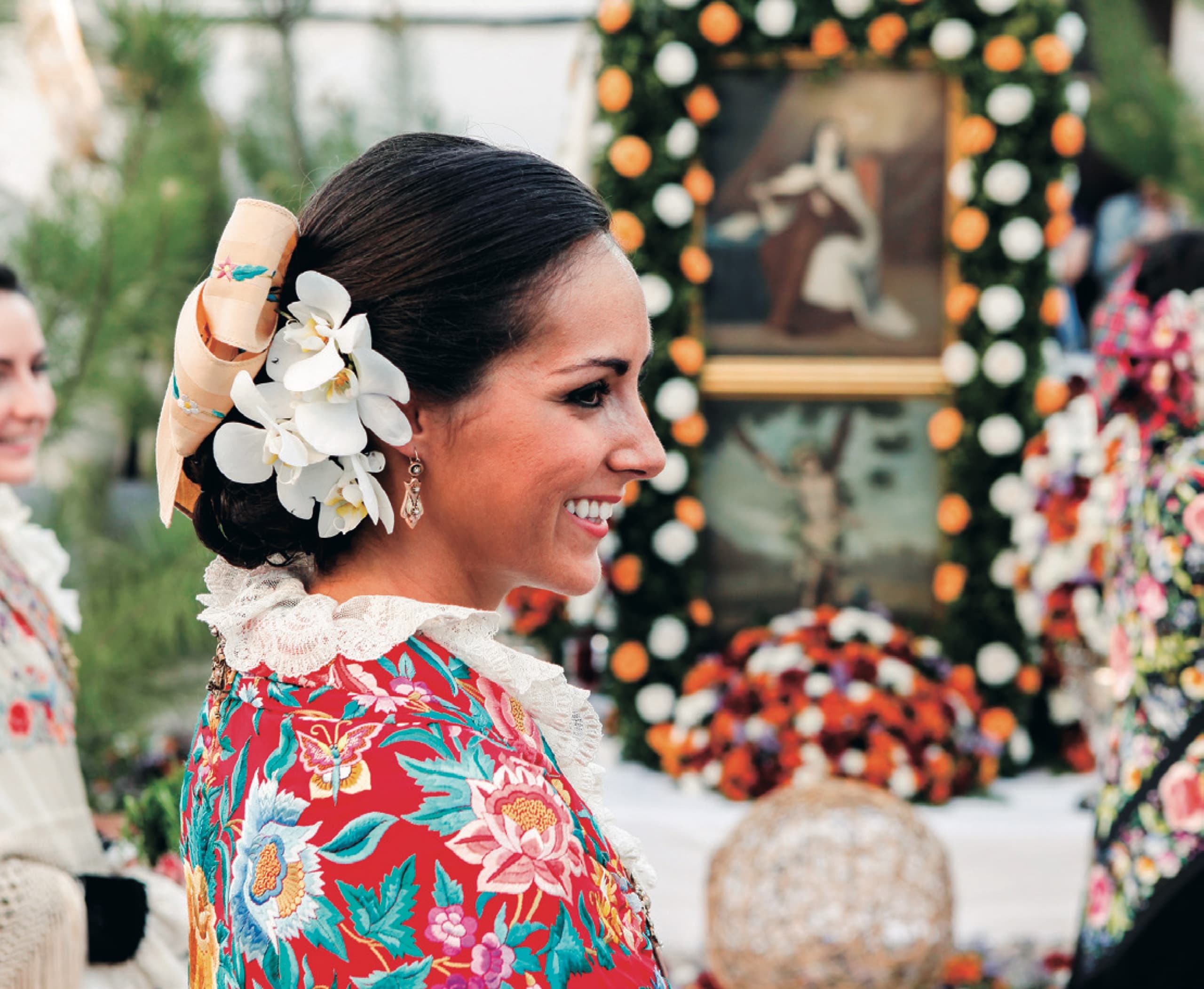
One of the most eagerly awaited moments is the Romero, when the procession of mountain women dressed in traditional costume winds through the streets amid young branches, flowers, folk songs, and the sounds of bagpipes, tambourines, flutes, and drums. Accompanied by the mayordomos and mayordomas, the procession makes its way to the cross and performs a ritual full of gestures, offerings, and emotion that explains, step by step, the deep meaning of the festival.
The so-called “Afternoon of the Flowers” marks the beginning of the cycle and the introduction of the female stewards, figures who play a prominent role alongside the male stewards throughout the ritual. The Romero’s songs, which are didactic in nature, not only accompany the procession but also help interpret each phase of the ceremony, preserving an oral tradition that gives meaning and continuity to the custom. The following day, this same Romero is reenacted by children, thus reinforcing the generational transmission of a custom that remains alive because it continues to be shared.
As evening falls, the Jira begins, another of the most characteristic moments. Each cross procession heads out into the countryside and offers brothers and supporters a glass of wine in a relaxed, open, and deeply convivial atmosphere. Once night falls, the return to the village takes place while singing the fandangos of the Cross, in a scene steeped in mountain identity, folk music, and a sense of community. It is also then that the new stewardship roles are handed over, closing the cycle with a continuity that gives the festival its strength and enduring nature.
You can experience this at: